Tree removal
For a tree that is dead, dying, storm damaged, leaning toward the house or simply in the wrong place. Taken down in sections where space is tight.
Removal, pruning, stump grinding, storm cleanup and tree health checks for homes and properties in Staunton, Augusta County and Waynesboro. Tell us about the tree and request a free estimate.
How do I get a tree looked at in Staunton?
Send the free estimate form on this page with the address of the tree and what you are seeing. Staunton Tree Pros takes requests for tree removal, pruning, stump grinding, storm and emergency work, and tree health checks in Staunton, Augusta County and Waynesboro, Virginia. The estimate costs nothing.
Five kinds of tree work cover nearly everything a yard in the Valley needs. Each page explains what the work involves, the signs that it is time, and the questions people ask most.
For a tree that is dead, dying, storm damaged, leaning toward the house or simply in the wrong place. Taken down in sections where space is tight.
Deadwood out, crossing limbs fixed, clearance over roofs and driveways, and young trees trained to a strong shape.
The stump ground out below the surface so you can mow, replant or reseed, with the grindings cleaned up or left as mulch.
Trees and limbs down on a house, car, fence or driveway, hangers caught in the canopy, and trees left leaning after a storm.
A look at a tree that is thinning, dropping leaves early or showing pests, with a plan for what can be done about it.
Tell us where the tree is and what it is doing. The more you can say about its size, what it stands near and what has changed, the more useful the first conversation is.
The order is the same whether it is one dead pine or a yard of overgrown maples. The point is that you see the plan and the price before anyone starts a saw.
Use the estimate form with the address, what kind of help you need and what you are seeing. A plain description is fine.
An estimate visit walks the tree and the ground around it: the house, wires, fences, the driveway and the route a crew and its equipment would take.
The estimate spells out the work, what happens to the wood and debris, and anything that would change the scope. It is free, and nothing is scheduled until you agree.
On the day, the work follows the plan in the estimate, and the site is raked and cleared before the crew leaves.
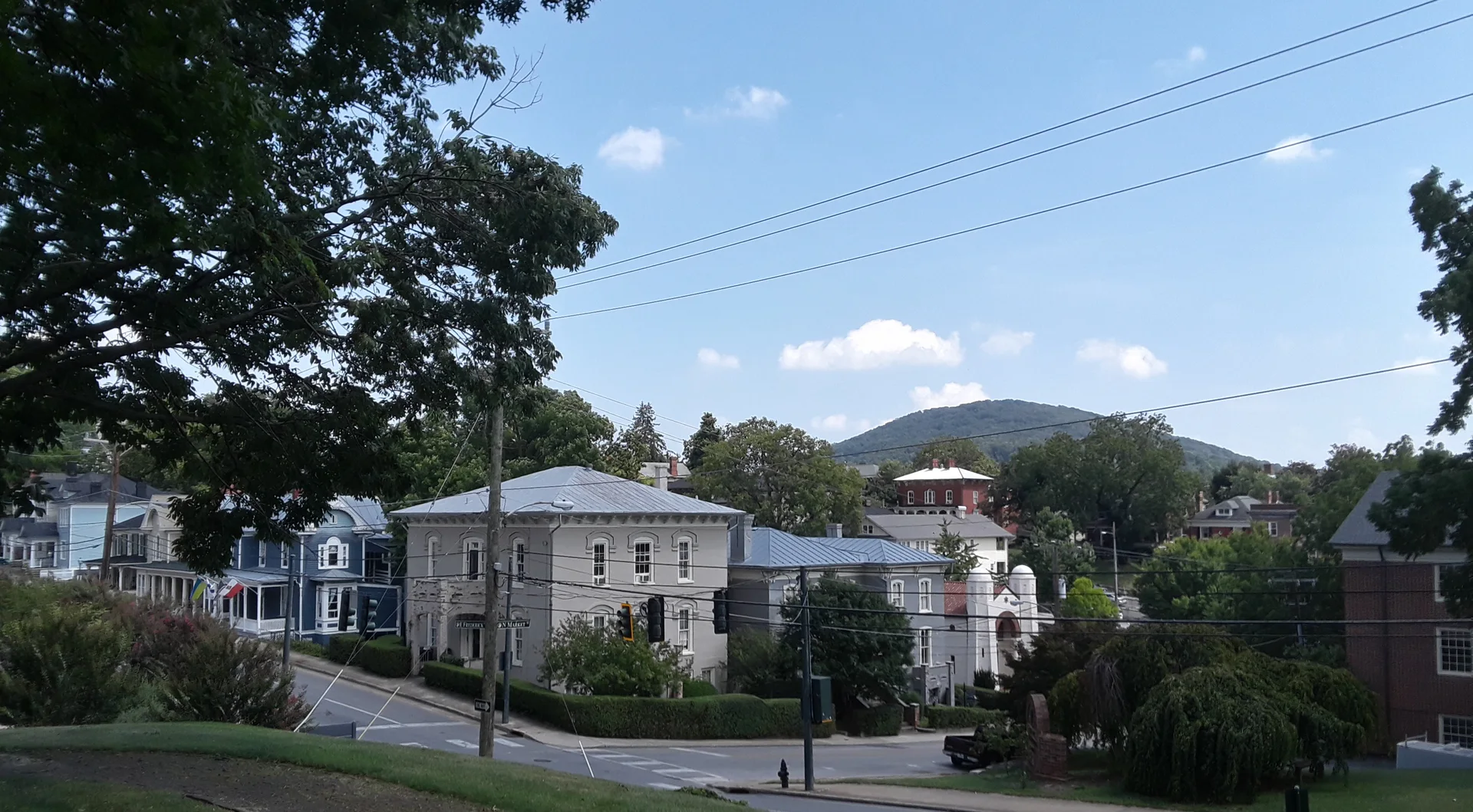
Staunton is an independent city in the middle of the Shenandoah Valley, with Augusta County wrapped around it, the Blue Ridge to the east and the Allegheny ridges to the west. Its older neighborhoods are full of big shade trees planted generations ago: oaks, maples, tulip poplars, sycamores and walnuts that now tower over slate roofs, porches and narrow streets.
That mix is what makes tree work here careful work. Lots are often steep and tight, with houses close together, overhead service lines running through the canopy and very little room to drop a trunk in one piece. Out in the county the trees are just as big but the questions change: long driveways, fence lines, pasture edges and outbuildings.
The weather adds to it. Summer thunderstorms bring sudden straight-line winds, winter brings ice and heavy wet snow that loads every branch, and the remnants of tropical storms can soak the ground before the wind arrives, which is when trees tip over at the roots. Much of the Valley floor sits on limestone, and on thin or rocky soil a tree's roots may not run as deep as its size suggests.
Most trees give warning before they fail. None of these signs means a tree has to come down, but each one is worth having looked at before the next storm:
If you are unsure, describe what you see on the estimate form. An unhurried look at a tree in good weather is far easier than a cleanup after it lands on something.
Yes. Requesting an estimate costs nothing and does not commit you to anything. Nothing is scheduled until you have seen the estimate and agreed to it.
Staunton, the communities of Augusta County around it, and Waynesboro. If the tree is just outside those places, send the request anyway and say where it is.
Yes, emergency and storm tree service requests are taken. If a tree is on a power line or anyone is hurt, call 911 and your electric utility first, then send the form.
It depends on where the tree is. Before work on a tree near the street, in a historic district or in shared HOA space, check with the City of Staunton or Augusta County, and your HOA if you have one, about whether any approval is needed.
The address, what kind of help you want, and what you are seeing: the type or size of the tree if you know it, what it is near, and anything that has changed recently, such as a new lean or falling branches.
Send the estimate form with the address and what you are seeing. The estimate is free, and nothing is scheduled until you have seen it.