Stump grinding in Staunton, VA. Clean removal, usable yard.
Grinding takes a stump down below the surface so you can mow over it, reseed or plant again, without digging out the whole root mass.
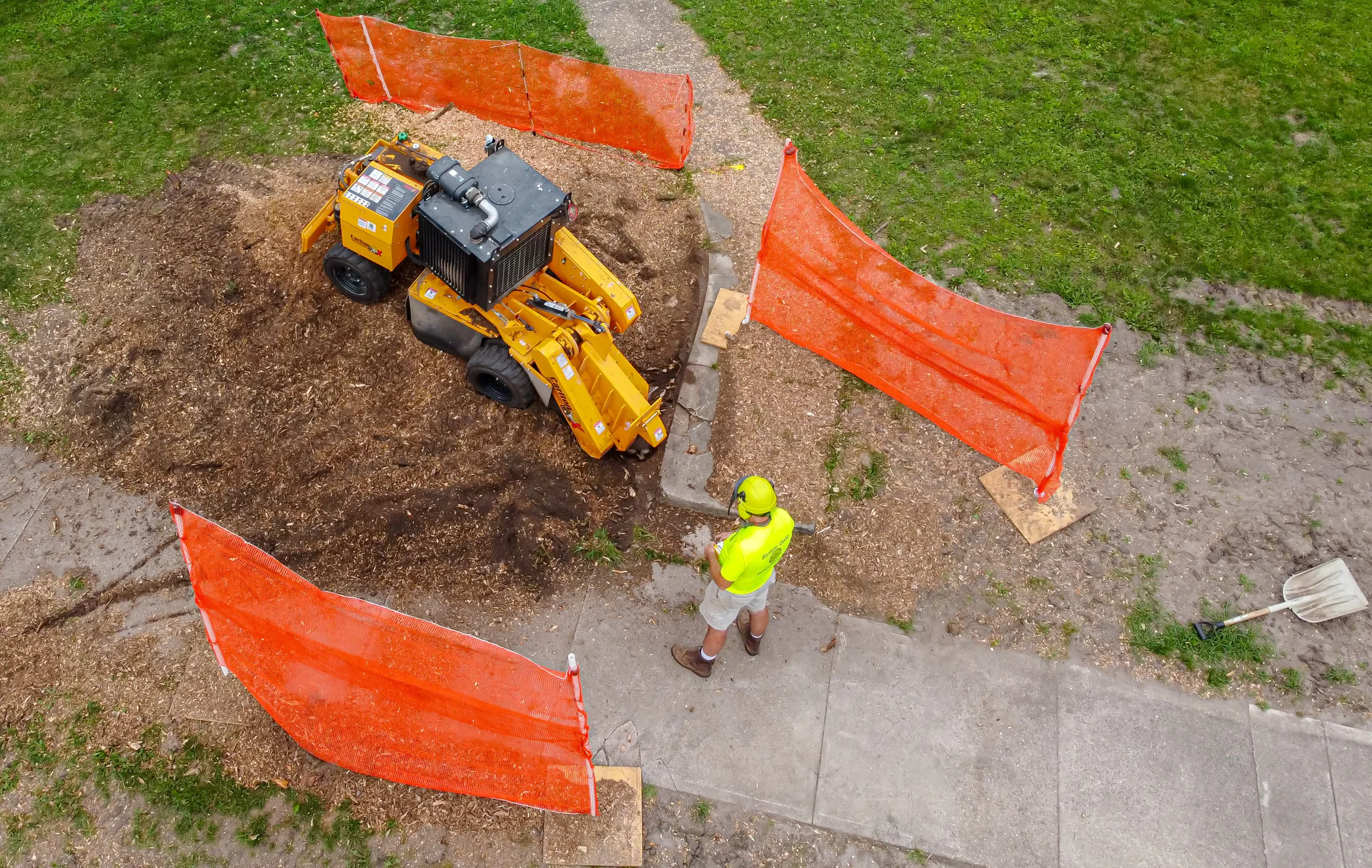
What is stump grinding, and is it worth it?
Stump grinding uses a machine with a toothed spinning wheel to chip a tree stump down below ground level, leaving a mix of wood chips and soil you can rake out and replant. Staunton Tree Pros takes free estimate requests for stump grinding in Staunton, Augusta County and Waynesboro, as a stand-alone job or with a tree removal.
Why remove that stump?
A stump left in the yard is more than something to mow around. It can send up new shoots for years, it is a tripping hazard in a play area, and as it rots it can draw wood-feeding insects such as carpenter ants, and termites where they are active. It also takes up space you may want for a new tree, a garden bed or a patio.
Grinding removes the problem without excavating. The wheel chips the stump and the top of the main roots down below grade, so the spot can be leveled, covered with topsoil and seeded or planted. The remaining roots below the grind slowly decay on their own.
What happens, step by step
Stump grinding is often the quickest job in tree work, but it still starts with a look at the site.
A look at the stump and access
Stump size, surface roots, nearby beds or walls, and the width of the gate or path to it are checked, since they decide which grinder can reach it.
Written estimate
The estimate covers how many stumps, how deep, and what happens to the grindings.
Utility marking
Underground lines are marked through Virginia 811 before any grinding below ground.
Grinding and cleanup
The stump is ground below grade and the grindings are raked out, hauled, used to backfill or left as mulch, as agreed.
How deep, and what is left behind
Grinding depth depends on what comes next. Commonly it goes somewhere around six to twelve inches below the surface, which is enough for grass and most planting. If you plan to build, pour a walkway or plant a new tree in the same spot, say so on the request, because that may call for a deeper grind or a wider one that follows the surface roots.
A ground stump leaves a pile of grindings that is larger than most people expect: wood chips mixed with soil. You can have them raked out and hauled off, used to backfill the hole, or kept as mulch for beds. Fresh grindings rob nitrogen from the soil as they break down, so for a new lawn it is usually better to remove most of them and fill with topsoil.
Because grinding goes below ground, underground lines such as gas, water, electric and cable are normally marked through Virginia 811 before the work starts. Irrigation lines and invisible pet fences are not marked by 811, so point them out if you have them.
Replanting after the stump is gone
Grass seeded over well-prepared topsoil usually fills in a ground stump spot within a growing season or two. For a new tree, it is generally better to plant a few feet to one side of the old stump rather than in the center of it, where decaying roots and leftover chips make poor soil and the ground may settle over time.
Expect the patch to sink a little as the buried wood decays. Topping it up with soil once or twice in the first year keeps it level with the lawn.
Questions people ask
How long does stump grinding take?
It depends on the stump’s diameter, the kind of wood, how many surface roots need following and how easy the spot is to reach. The estimate visit is the time to ask about your stump.
How deep does stump grinding go?
Commonly somewhere around six to twelve inches below the surface, which suits grass and most planting. Deeper grinding can be requested for construction or for planting in the same spot.
Can I plant grass over a ground stump?
Yes. Rake out most of the grindings, fill with topsoil, and seed. Grass usually establishes within one or two growing seasons, and the spot may need topping up as the old wood decays.
What happens to the wood chips?
You choose: hauled away, used to backfill the hole, or left for mulch. Say which you want on the request so it is in the estimate.
Do utility lines need to be marked first?
Underground utility lines are normally marked through Virginia 811 before grinding. Private lines such as irrigation, lighting and pet fences are not marked, so point them out.
A free estimate starts with a few details
Tell us where the tree is and what it is doing. The more you can say about its size, what it stands near and what has changed, the more useful the first conversation is.
- Free estimate, no obligation
- Nothing is scheduled until you have seen the estimate
- Emergency and storm requests are taken