Tree removal in Staunton, VA, done in the right order.
A dead, damaged or badly placed tree comes down safest with a plan: an assessment first, a written estimate, then careful work in sections where space is tight.
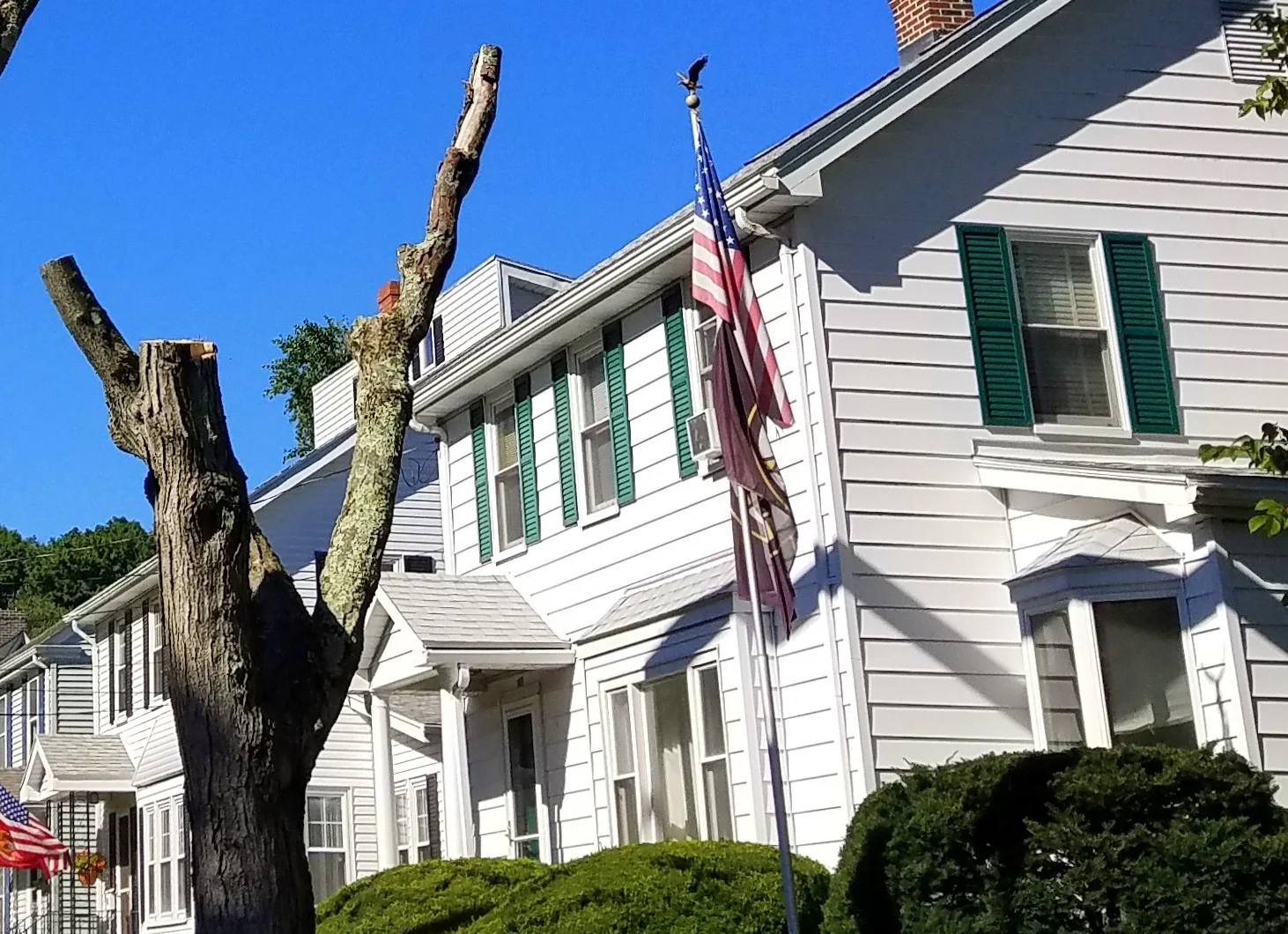
When does a tree in Staunton need to be removed?
A tree usually needs removing when it is dead or dying, structurally damaged by a storm, diseased beyond treatment, or leaning toward a house, road or power line. Staunton Tree Pros takes free estimate requests for tree removal in Staunton, Augusta County and Waynesboro, and nothing is scheduled until you approve the estimate.
When a tree needs to come down
Not every tree needs to come down. Plenty of trees that look rough can be pruned, cabled or treated and kept for years. But when one does need to go, whether it is diseased, damaged by a storm, growing into the house or simply at the end of its life, it needs to come down the right way.
The right way starts with a proper look at the tree: how it leans, where the weight is, what is decayed, and what it would hit. From that comes a plan for how the tree is taken apart, where each piece goes, and what is left behind when the work is done. That plan is what the written estimate describes, so there is no guesswork on the day and no surprises about the scope.
In Staunton's older neighborhoods a tree is rarely felled in one piece. With houses, garages and service lines close by, it is usually taken down from the top in sections, with heavier pieces lowered on ropes. On open county land there may be room to fell a tree whole, which is quicker, but only when the drop zone is truly clear.
What happens, step by step
Removal follows the same order every time, whether it is a small dead pine or a big oak over the house.
Assessment on site
The tree, its lean, any decay, and everything around it are looked at, along with access for equipment and where the wood can go.
Written estimate
You get the plan and the price in writing: how the tree comes down, what happens to the wood, brush and stump, and what is not included.
Scheduled removal
The tree comes down by the plan, usually in sections near buildings and wires, with heavy pieces lowered rather than dropped.
Cleanup
Brush is chipped or hauled, the wood is cut to length or removed as agreed, and the yard is raked. Stump grinding can be added the same visit.
Trees that come down often around Staunton
A few situations come up again and again in the Valley:
- Dead ash trees. The emerald ash borer has been killing ash trees across Virginia since it was first found in the state in 2008. Ash wood turns brittle quickly once a tree dies, which makes it more dangerous to climb and take down the longer it stands. If an ash in the yard is thinning from the top, it is worth deciding early.
- Bradford and Callery pears. These ornamental pears were planted along many streets and yards. Their branches meet at tight angles and split apart in wind, ice and snow, often in the tree's middle years. Virginia now lists Callery pear as an invasive plant.
- Big trees on small lots. Oaks, maples and tulip poplars planted decades ago can outgrow the space between houses, with limbs over roofs on both sides of a property line.
- Storm-damaged trees. A tree that has lost a major limb, split at a fork or started to lean after a storm may be beyond saving even if it still has leaves.
Permits, neighbors and insurance
Rules differ from place to place, so check before work starts on any tree near the street, in a historic district or in shared HOA space. The City of Staunton or Augusta County, and your HOA if you have one, can tell you whether any approval is needed. Street trees in the public strip may not be yours to remove at all.
If a tree stands near a property line or hangs over a neighbor's yard, talk with the neighbor before the work is scheduled. Access often means crossing a lawn or parking on a shared drive.
Insurance is worth a call to your agent. Policies differ, but many homeowner policies help when a tree has fallen on a covered structure, and many do not pay to remove a healthy standing tree. Photos of the tree and any damage, taken before cleanup starts, help either way.
Questions people ask
How much does tree removal cost?
It depends on the tree’s size, its condition, what it stands near and how much room there is to work. A tree over a house with wires running through it takes far more time and care than the same tree in an open yard. The free estimate gives you the figure for your tree before anything is scheduled.
Do I need a permit to remove a tree in Staunton, VA?
It depends on where the tree is. Check with the City of Staunton or Augusta County, and your HOA, before work on a tree near the street, in a historic district or in common areas. A street tree in the public strip may belong to the city.
Will homeowner insurance cover tree removal?
Sometimes. Many policies help when a tree falls on a covered structure, and many do not cover removing a standing tree that has not caused damage. Your policy and your agent have the real answer, and photos taken before cleanup help a claim.
Is the stump removed too?
Removal normally leaves a low stump. Stump grinding is a separate step that can be added to the same visit, so ask for it on the estimate if you want the spot mowable or plantable.
What happens to the wood?
You decide. Brush is usually chipped, and the trunk can be hauled away or cut into rounds and left for firewood. Say what you prefer when you request the estimate.
A free estimate starts with a few details
Tell us where the tree is and what it is doing. The more you can say about its size, what it stands near and what has changed, the more useful the first conversation is.
- Free estimate, no obligation
- Nothing is scheduled until you have seen the estimate
- Emergency and storm requests are taken