Tree pruning and trimming in Staunton, VA.
Healthy trees start with the right cuts. Done well, pruning takes out dead and weak wood, keeps limbs off the roof and wires, and helps a tree ride out the next storm. Done badly, it shortens a tree’s life.
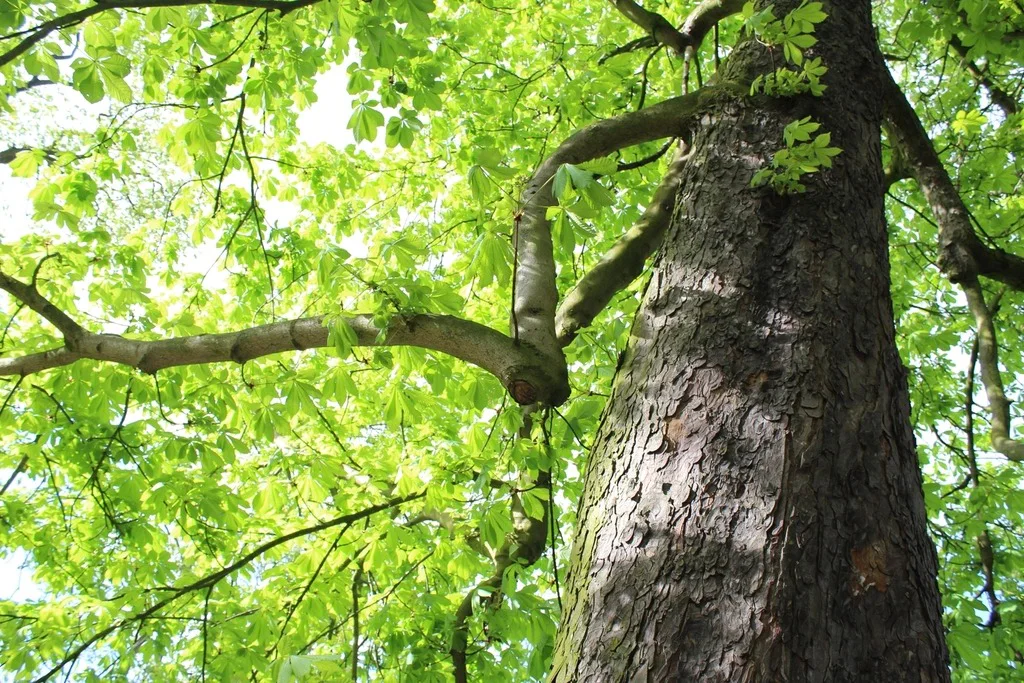
What does tree pruning do for a tree in Staunton?
Good pruning removes dead, diseased and weak branches, clears limbs away from roofs, driveways and service lines, and shapes young trees so they grow a strong structure. Staunton Tree Pros takes free estimate requests for tree pruning and trimming in Staunton, Augusta County and Waynesboro, Virginia.
More than keeping trees tidy
Pruning is not just about looks. Done correctly, it promotes healthier growth, extends the life of a tree and lowers the risk of storm damage by taking out weak branches before they fail on their own.
Done incorrectly, it can permanently damage a tree. Every cut is a wound the tree has to seal off, so the size and place of each cut matters. That is the difference between a trained arborist and someone with a ladder and a chainsaw: knowing which branch to remove, where to cut it, and when to leave a branch alone.
In the United States, tree pruning work is described by a published standard, ANSI A300, which sets out the accepted ways to prune for clearance, structure, health and safety. Asking whether pruning will follow it is a fair question for anyone you hire.
What happens, step by step
A pruning job is planned branch by branch, so you know what is coming off before the work starts.
The tree is looked at
The canopy, the main unions and any deadwood, decay or rubbing limbs are checked, along with what the branches hang over.
A pruning plan
The estimate lists the goals, such as clearance, deadwood removal or reducing a heavy limb, and roughly how much will be taken.
Careful cuts
Branches are removed at the right place, just outside the branch collar, and big limbs are lowered in pieces rather than dropped.
Cleanup
Brush is chipped or hauled and the ground under the tree is raked clear.
When to prune trees in the Valley
Timing depends on the tree and the reason:
- Late winter. For many trees the dormant season, before buds open, is a good time for structural pruning. Without leaves the branch structure is easy to see, and the tree is ready to seal cuts once growth starts in spring. Fruit trees are traditionally pruned at this time.
- Oaks. Oak wilt is present in Virginia, and fresh pruning cuts in spring and early summer can attract the sap beetles that carry it. Leave routine oak pruning for the dormant season unless a branch is dangerous.
- Before storm season. Taking out dead and weak branches before summer thunderstorms and winter ice cuts down on what falls when the weather turns.
- After a storm. Broken or hanging limbs should come out as soon as it is safe to do it, so they do not fall later or tear more bark.
- Any time deadwood shows. Dead branches and crossing limbs that rub are signs a tree is overdue, whatever the season.
Cuts that hurt trees
A few common practices do real harm, and it is worth knowing them before anyone climbs your tree:
- Topping: cutting the top off a tree to shorten it. The tree answers with a mass of weakly attached sprouts that grow back fast and break easily.
- Flush cuts: cutting a branch tight against the trunk removes the collar the tree needs to seal the wound.
- Lion tailing: stripping all the inner branches and leaving tufts at the ends puts the weight where the limb is weakest.
- Taking too much at once: a common rule of thumb is to remove no more than about a quarter of the live canopy in one season.
- Climbing spikes on a tree that is staying: spikes are for removals, because every step punctures the bark.
A good estimate says what will be cut and why: deadwood over a certain size, clearance over the roof, a reduction on one heavy limb. That makes it easy to compare estimates and to know the job was done as described.
Questions people ask
Is tree trimming the same as tree pruning?
People use the words for the same job. Trimming usually means shaping for appearance or clearance, while pruning focuses on the tree’s health and structure: removing dead, diseased or weak branches. Both need knowledge of how trees respond to cuts.
How often should trees be pruned?
It varies with the tree, its age and what it grows over. Many mature trees do well with a check and light pruning every few years, while young trees benefit from more frequent structural pruning while their shape is still being set.
Can pruning damage a tree?
Yes. Topping, flush cuts, lion tailing and removing too much of the canopy at once all do lasting harm. Pruning that follows the ANSI A300 standard is designed to protect the tree’s health.
When should oaks be pruned in Virginia?
Routine oak pruning is best left for the dormant season. Oak wilt is present in Virginia, and fresh wounds in spring and early summer can attract the beetles that spread it. Dangerous branches are the exception.
Do you prune fruit trees?
Fruit tree pruning requests are welcome. Fruit trees are pruned differently from shade trees, for structure, light and airflow, and the work is traditionally done in late winter before the buds break.
A free estimate starts with a few details
Tell us where the tree is and what it is doing. The more you can say about its size, what it stands near and what has changed, the more useful the first conversation is.
- Free estimate, no obligation
- Nothing is scheduled until you have seen the estimate
- Emergency and storm requests are taken